Beginner guides
How to Read a Cross Stitch Pattern (A Beginner's Guide)
A cross stitch pattern is a grid where every square is one stitch and every symbol is one thread colour. Here is how to read the chart, the key, and the special marks — and where to make your first stitch.
By Darkroot Stitchery · Updated · 4 min read

A cross stitch pattern (also called a chart) is a map of your finished design drawn on a grid. Each square on the grid is one cross stitch on your fabric, and each symbol or colour inside a square tells you which thread to use. Once you know that, the rest of the pattern is detail: the key, the grid lines, and a few special marks.
What's inside a cross stitch pattern?
Most PDF patterns, including ours, come with the same set of pages:
- The chart — the design on a grid. Large designs are split across several pages with a little overlap so you can line them up.
- The key (or legend) — a table that matches each symbol to a thread colour and its number, usually DMC.
- The project details — stitch count, finished size on different fabric counts, and how many strands of thread to use.
Many patterns include two versions of the chart: a colour chart that is easy to read on a screen, and a black and white symbol chart that prints cleanly and still works if two colours look similar.
How to read the grid
The chart grid mirrors the holes in your fabric. On Aida cloth, one square on the chart equals one square of Aida, and you make one full cross over it.
- Every 10th line is thicker. These bold lines split the grid into 10 × 10 blocks so you can count quickly without losing your place.
- Arrows on the edges mark the centre. Follow the arrows on the top and side edges inward; where the lines meet is the middle of the design.
- Empty squares are bare fabric. Leave them unstitched — they are part of the design.
How to read the key
The key tells you what each symbol means. A typical row looks like this:
| Symbol | DMC | Colour name | Stitches | Skeins |
|---|---|---|---|---|
| ★ | 321 | Red | 1,240 | 1 |
| ● | 3865 | Winter white | 860 | 1 |
The DMC number is what you buy at the shop or online. DMC is the most widely used brand of stranded cotton, and most patterns list it even if you later convert to another brand.
Strands matter too. Stranded cotton comes as six thin strands twisted together. You separate them and stitch with only a few — for 14-count Aida that is usually two strands. The pattern's details page tells you how many to use.
Special marks you will see
Not everything on a chart is a full cross. These are the most common extra marks:
- Straight lines along the grid are backstitch — outlines and fine details stitched after the crosses.
- A symbol filling only half or a corner of a square is a fractional stitch (half or quarter stitch), used for smoother curves.
- Small dots or circles on grid intersections are usually French knots, often used for eyes or flower centres.
The key lists each of these separately, with its own thread colour and strand count.
Where should you start stitching?
Start in the centre. Fold your fabric in half both ways and crease it lightly — where the folds cross is the centre. Find the centre on the chart using the edge arrows, and make your first stitch there. Starting in the middle keeps the design centred and leaves an even border for framing.
From there, work outward one colour at a time, in small sections. A good habit is to mark off finished squares on a printed copy with a highlighter, so you always know where you stopped.
Frequently asked questions
Does one square on the pattern equal one stitch?
Yes. On a standard cross stitch chart, each square is one full cross stitch worked over one square of Aida (or over two threads of evenweave or linen fabric).
What do the numbers in the pattern key mean?
They are thread colour numbers, almost always DMC stranded cotton. Buy the colours by number; the colour names are only a guide and can differ between brands.
How many strands of floss should I use?
Follow the pattern's instructions. As a rule of thumb, use two strands on 14-count Aida, two on 16-count, and one or two on 18-count, depending on how solid you want the colour to look.
Do I have to start in the middle?
No, but it is the easiest way to keep the design centred on your fabric. If you start at a corner, measure carefully so you leave enough margin on every side.
Patterns to practise on
Browse all patterns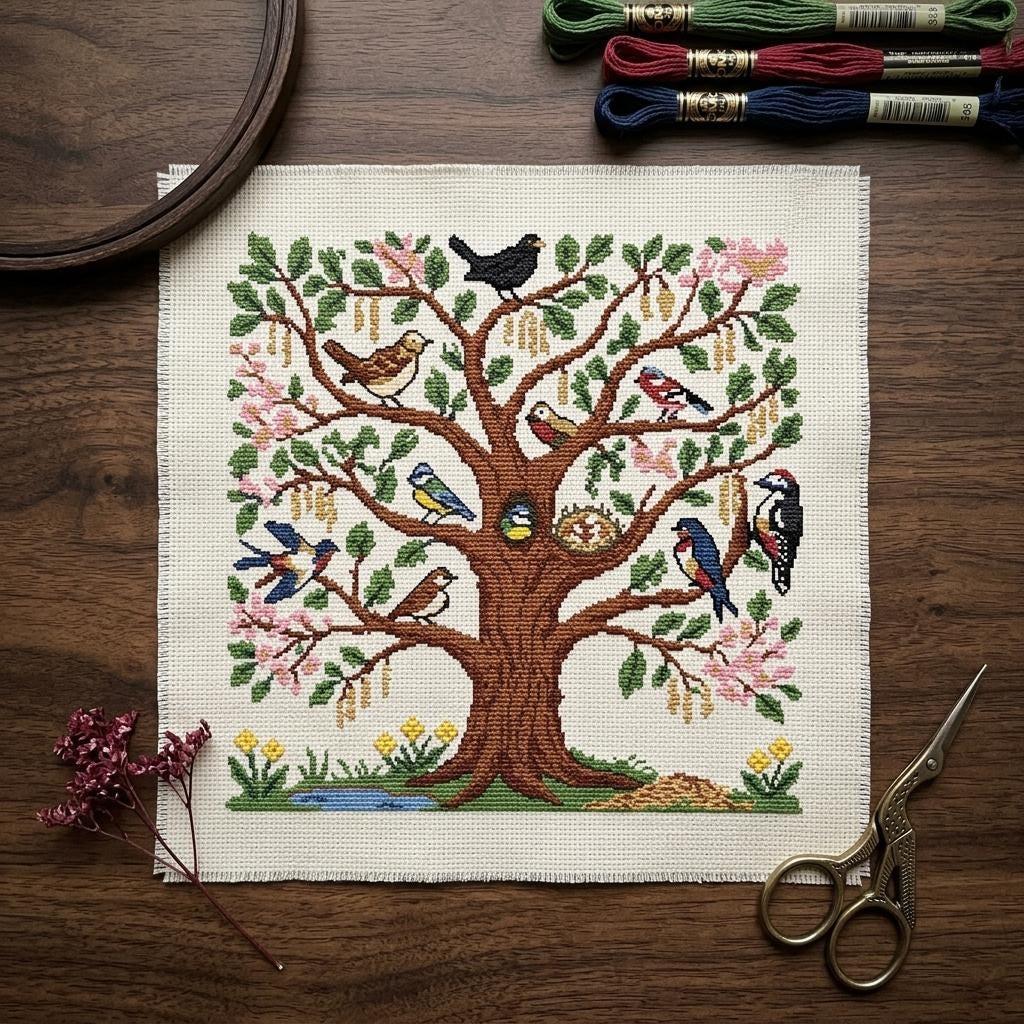
Animals · Intermediate
Spring Oak and Birds Cross Stitch Pattern
$4.50
This spring oak and birds design shows a leafy oak tree with perched birds in a nature-inspired style, delivered as a cross stitch pattern PDF.
Animals · Intermediate
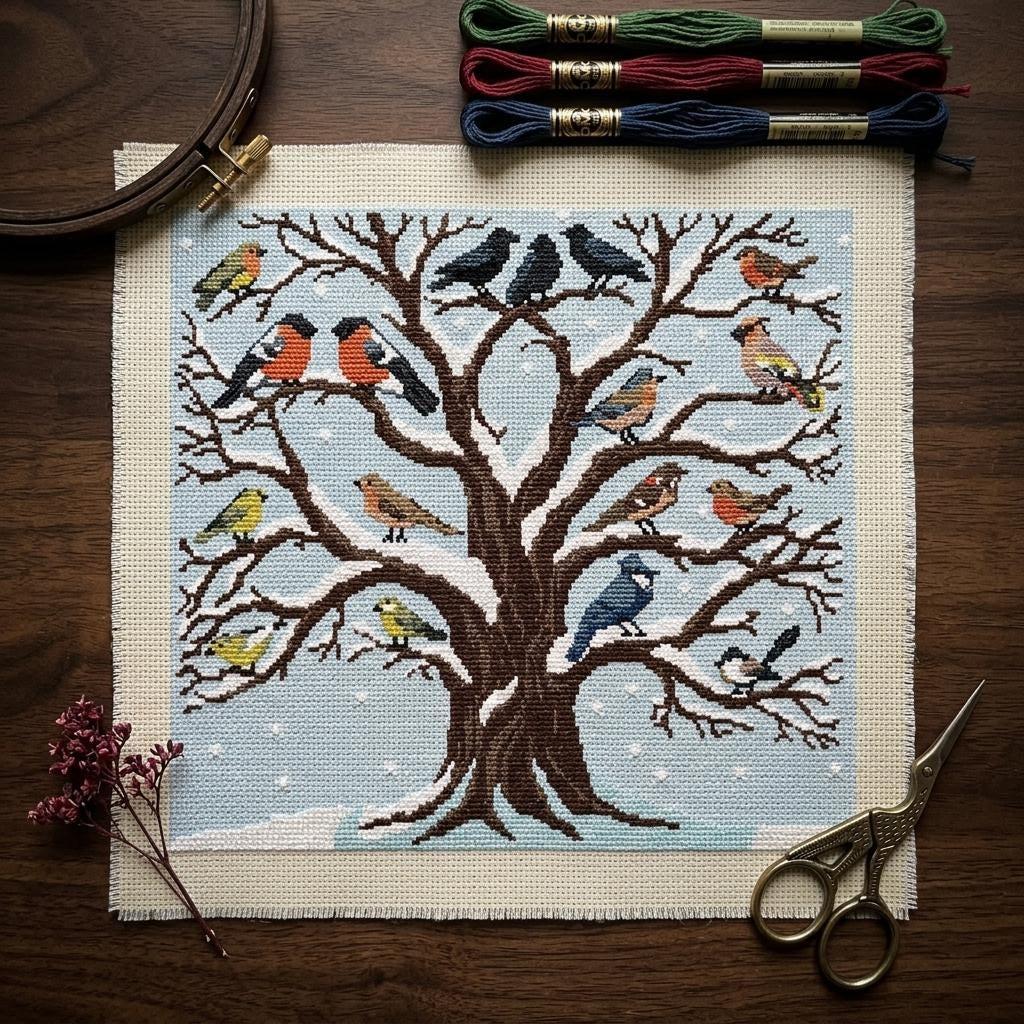
Winter Birds in Bare Tree Cross Stitch Pattern
$4.50
Winter Birds in Bare Tree Cross Stitch Pattern, Folk Art Sampler PDF
Animals · Advanced
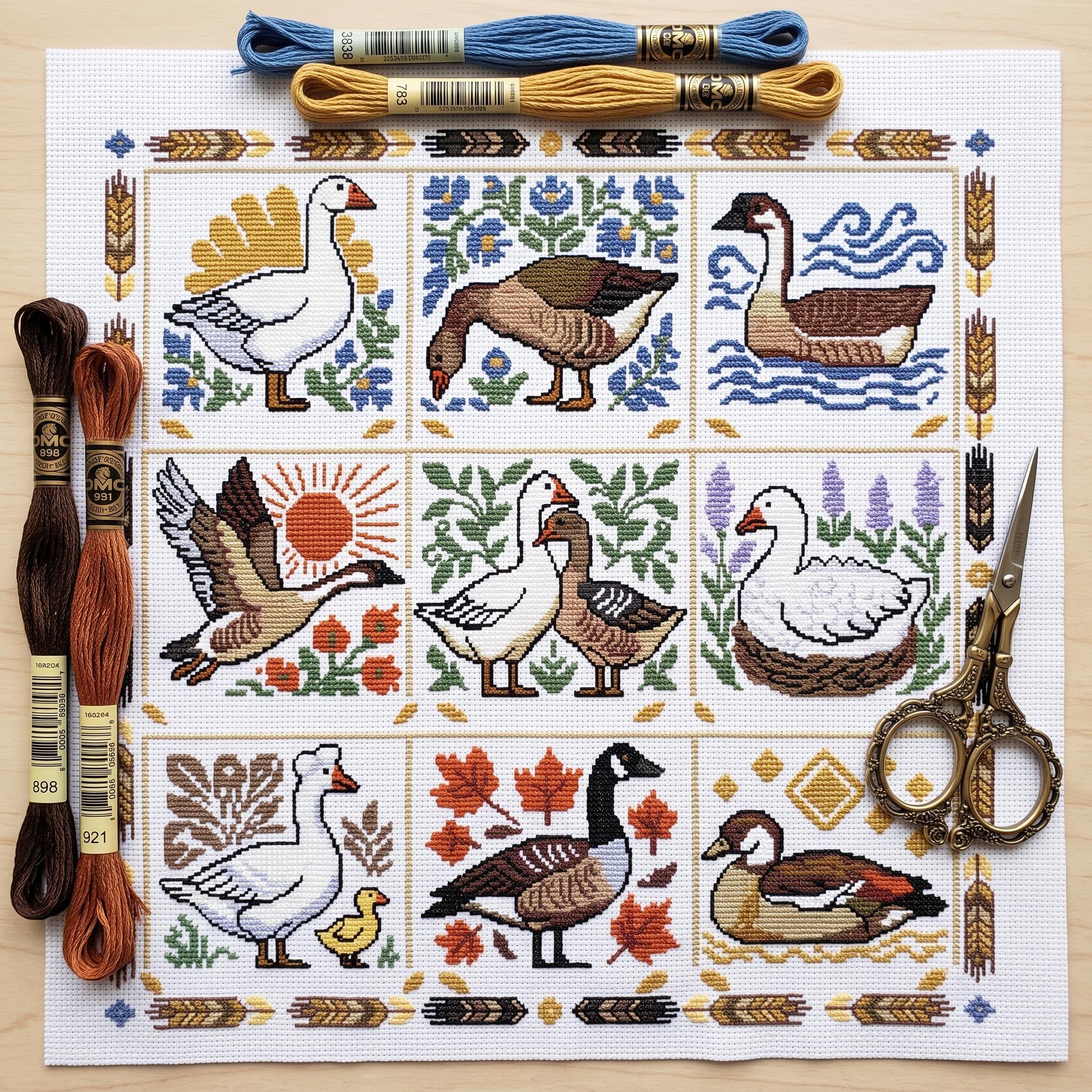
Silly Geese Cross Stitch Pattern
$4.50
Meet your new favorite silly friend, this charming geese is the perfect cross stitch project for anyone who loves whimsical, farm-inspired d
Christmas & Holiday · Intermediate
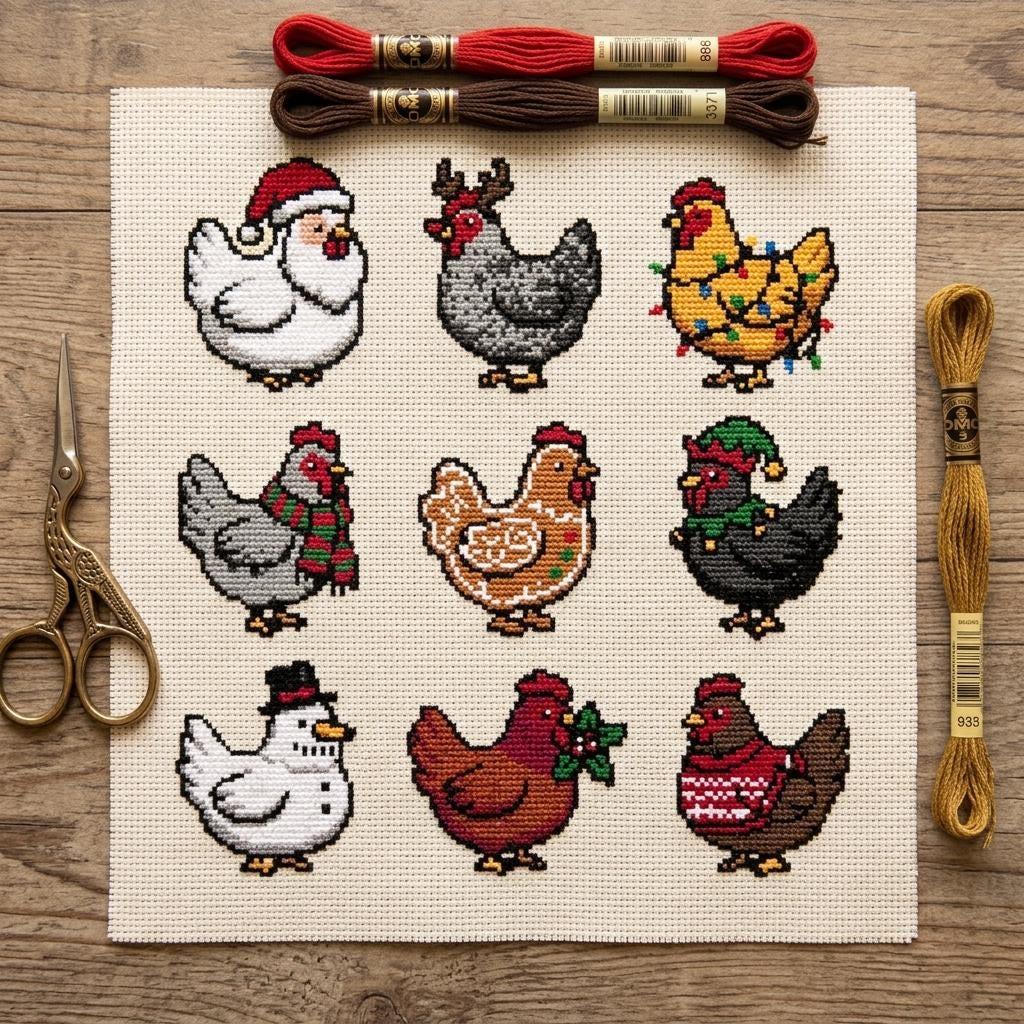
Christmas Chicken Cross Stitch Pattern
$4.50
Christmas Chicken Cross Stitch Pattern, 9 Mini Festive Hens Sampler, Santa Hat Twinkle Lights, Farmhouse Holiday Ornaments, Counted PDF